SUPPLY CHAIN: ACTIVE LOW VOLTAGE / INDUSTRIAL AUTOMATION GUANGZHOU · CHINA
ALTERNATIVE LIBRARY · 05

Sensors & Relays: Chinese alternatives to
Omron, Pepperl+Fuchs & Turck

Replacing proximity, photoelectric and encoder sensors, and safety relays, with Chinese brands — what can switch, what needs caution, and why safety-related parts should not be cost-cut. An honest, type-by-type judgment.
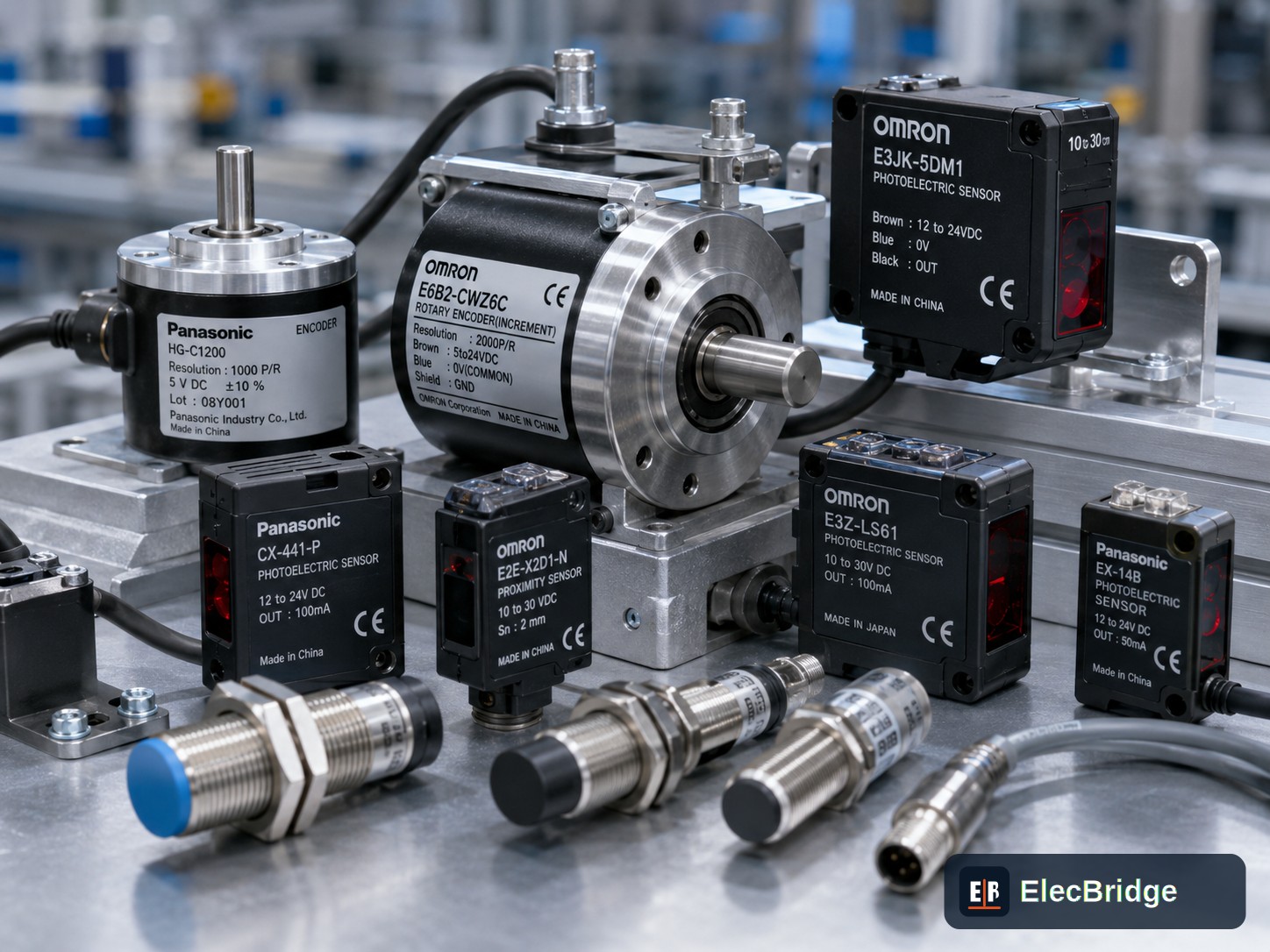
Sensors and relays - ElecBridge
Short Answer

Sensor and relay alternatives split into two categories: ordinary detection can switch freely; safety-related parts stay conservative. For ordinary proximity, photoelectric and limit sensors, Chinese brands are highly cost-effective and fully replaceable. For safety relays, safety light curtains, and high-precision encoders, be cautious — on safety-related parts, the small saving is never worth the risk.

WHO · WHO THIS IS FOR

If you're weighing this up

WHAT · REPLACEABILITY BY TYPE

What can switch, what needs caution

Replaceability varies a lot — the dividing line is "safety-related or not". Switch freely on ordinary detection; stay conservative on safety-related (safety relays, light curtains) and high-precision (absolute encoders). The table makes the split clear.

TypeCurrentChinese optionsTypical savingReplaceability
Proximity sensors (inductive/capacitive) Omron / Pepperl+Fuchs / Turck Mainstream Chinese (Elco / Taizheng etc.) 50–70% Low risk · can switch
Photoelectric sensors Omron / Keyence Mainstream Chinese brands 45–65% Low risk · can switch
Limit / micro switches Omron / Schneider Mature Chinese brands 55–70% Low risk · cost-cut first
Control / solid-state relays Omron CHINT / Xinda / mainstream Chinese 50–65% Low risk · can switch
Incremental encoders Omron / Pepperl+Fuchs Mainstream Chinese (check resolution / IP rating) 40–55% Medium · evaluate
Absolute / high-precision encoders Heidenhain / Pepperl+Fuchs Caution — high-precision needs validation Med-high · caution
Safety relays / safety light curtains Pilz / Omron / SICK Safety-related — do not replace lightly High risk · keep

Our core principle — "don't cost-cut on safety"

Switch ordinary detection freely (save 50–70%); stay firmly conservative on anything safety-related. For proximity, photoelectric and limit sensors, Chinese brands are extremely cost-effective and safe to switch. But safety relays and safety light curtains protect people and equipment — the small saving is not worth the risk. We help you draw the line clearly.

RISKS · CONFIRM BEFORE SWITCHING

Think through these traps before you switch

Common risk points when switching sensors or relays

BY MODEL · FIND A CROSS-REFERENCE

Find your specific model

Original model → Chinese options

Below are model-level cross-references based on real applications, not datasheet matching. We keep adding models — 5–10 new ones each month.

Omron E2E proximity sensor cross-reference

Omron · proximity · position detection

Omron E3Z photoelectric sensor cross-reference

Omron · photoelectric · object detection

Pepperl+Fuchs proximity sensor cross-reference

Pepperl+Fuchs · proximity

Omron MY/LY relay cross-reference

Omron · control relay · control circuits

Turck proximity sensor cross-reference

Turck · proximity · industrial detection
Coming soon

Keyence photoelectric sensor cross-reference

Keyence · photoelectric · high-end detection
Coming soon
FAQ

Sensor & relay alternatives frequently asked

Q.01
Are Chinese proximity sensors stable enough to replace Omron?
For ordinary position detection, fully adequate — and you save 50–70%. Top-tier Chinese proximity sensors are mature for ordinary conditions. What matters is validating detection distance, IP rating and noise immunity against your actual conditions — oil, dust, washdown and high-speed detection need extra checks. Ordinary applications are safe to switch.
Q.02
Can safety light curtains and safety relays also be switched to Chinese brands?
This is one category where we'll tell you clearly to stay cautious. Safety-related parts protect people and equipment, and must hold the relevant safety rating (SIL/PLe). The saving is small, but if something goes wrong, the cost is personal safety and major liability. We generally recommend keeping Pilz, SICK or similar specialist brands, or choosing options with full safety certification. This is not a place to cost-cut.
Q.03
Can encoders be switched to Chinese — is the accuracy worse?
Depends on type. Ordinary incremental encoders — mainstream Chinese can replace; just confirm resolution, IP rating and shaft diameter match. But absolute encoders and high-precision encoders (e.g., machine-tool positioning) — measure accuracy before deciding, and in some high-precision cases we'll advise keeping Heidenhain or similar. Switch in ordinary applications; measure first in high-precision ones.
Q.04
There are so many sensor models — can you cross-reference to a specific replacement?
Yes. Send us your current sensor brand and model list, and we cross-reference each one to a suitable Chinese replacement, with detection distance, output type and IP rating matched. This is what we do best — 19 years on, we know the mainstream sensor cross-references inside out.
Q.05
How do I get a sensor alternative evaluated?
Send us your sensor/relay list (brand, model, function, application environment). Within 48–72 hours you get an item-by-item review: switch / caution / keep, recommended Chinese models, expected savings, and safety-related items flagged separately. Free.
— GET STARTED

Send us your sensor list

Within 48–72 hours we cross-reference each item to a suitable Chinese replacement — switch / caution / keep clearly marked, with safety-related items flagged separately. Free · if it's not a fit, we'll tell you straight.

Send your list for a cross-reference
WhatsApp:+86 189 9841 9159 · sales@elecbridge.com
Chat on Telegram Chat on WhatsApp · fast reply